
Vivagreen

Foreign

Whole Foods Shows Customers the Bleak Future of Produce Without Bees

09 de maio, 2016

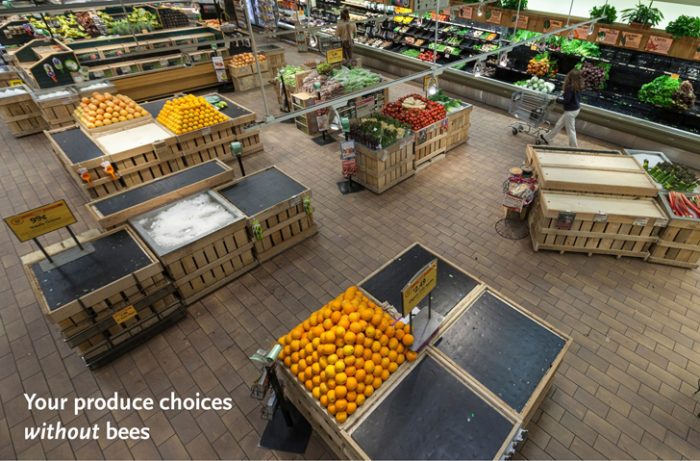
The decline in bee populations has been all the buzz lately, which led Whole Foods Market to team up with the Xerces Society to show us what a world—or at least, produce section—without bees would look like. The University Heights, Rhode Island store removed all foods that are reliant upon the important pollinators, and it leaves a pretty slim selection; 52% of the produce department’s offerings would be pulled from shelves without bees around to help.

green design, eco design, sustainable design, Whole Foods, Xerces, University Heights Whole Foods, Bee population, bee pollinated food, bee pollination

Busy bees help pollinate countless essential plants that make their way into our daily diets. To show just how important they are, Whole Foods removed quite the shopping list from their produce section: apples, onions, avocados, carrots, mangoes, lemons, limes, honeydew, cantaloupe, zucchini, summer squash, eggplant, cucumbers, celery, green onions, cauliflower, leeks, bok choy, kale, broccoli, broccoli rabe and mustard greens from their shelves. Although the store only yanked the fruits and veggies from the shelf temporarily, the scene could be a glimpse into the future, with the harsh reality of dwindling bee populations.

 Whole Foods is trying to help raise awareness of the importance of the bees, and will be donating 10 cents for every pound of organic summer squash sold from June 12-25. They’ve also implemented a program called Share the Buzz, giving shoppers insight on foods that help foster bees, as well as non-toxic pest tips.

Via Grist 

Images ©Treesha Duncan and Whole Foods

Os comentários estão desativados.

Tweets

Vivagreen

Principais posts

Mimetismo: o que é, para que serve, tipos e exemplos
Tampinhas se transformam em cidadania e ajudam o ambiente no RS
Que tal uma árvore que pode andar? Aposto que você não sabia dessa!
Arte Sustentável: Obras incríveis feitas com materiais reutilizados
Startup cria máquina que lava, seca, passa e dobra roupas
Recicle seu óleo de cozinha
A numeração separa o material plástico em sete diferentes tipos. Você sabia?
General Motors pulveriza carro elétrico mais barato do mundo que roda 305 km por carga
Construções sustentáveis tornam-se opção de quem decide adotar um estilo de vida ecológico
Sunlution traz para o Brasil flutuadores com energia solar